Thursday, July 27, 2017


Williamina Paton Stevens Fleming (1857–1911)
Harvard University Open Collections Program
Williamina Paton Stevens Fleming was born in Dundee, Scotland, on May 15, 1857. Her talent in school was obvious from an early age, and at age 14 she began teaching in the Dundee public schools. In 1877 she married James Fleming, and a year later the couple immigrated to Boston to start a new life in America. In 1879, when she was pregnant with her first child, James left her and their unborn son.
Only 23 years old and a single mother, Fleming found employment as the housekeeper for Edward Pickering, a professor of astronomy at Harvard and the director of the Harvard College Observatory. Irritated by the poor work done by his male employees at the observatory, Pickering reportedly declared that his maid could do a better job, and shortly thereafter, in 1881, he hired Fleming to do some clerical work and mathematical calculations at the Observatory.
Fleming quickly proved Pickering right by developing a new system to classify stars according to their spectra, or the unique pattern of lines caused by the refraction of a star's light through a prism. Thanks to her new classification system, which became known as the "Pickering-Fleming System," Fleming cataloged over 10,000 stars within the next nine years. In 1890, she published her findings in the Draper Catalogue of Stellar Spectra.
Pickering eventually put Fleming in charge of editing all studies published by the Harvard Observatory and allowed her to hire dozens of young women to support her expanding stellar exploration efforts. One of these young women was Henrietta Swan Leavitt, who later discovered how to measure the universe. In 1898, the Harvard Corporation appointed Fleming to be the curator of astronomical photographs at the Harvard College Observatory, making her the first woman to hold this important position.
During the course of her career, Fleming discovered 10 novae, 52 nebulae, and 310 variable stars—a remarkable achievement for someone without a formal education in astronomy. Recognizing her contributions to the discipline, in 1906 the Royal Astronomical Society elected Fleming to its organization, the first time that prestigious body admitted an American woman. In 1910, she reached the pinnacle of her career by discovering white dwarfs, which are very hot and dense stars that are white in color. On May 21, 1911, Fleming died of pneumonia in Boston, Massachusetts.         


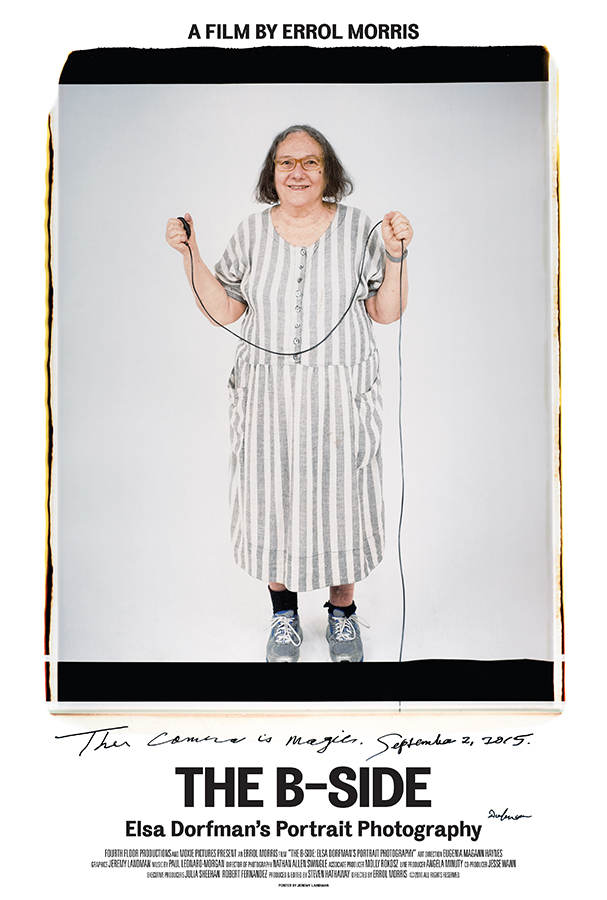
Elsa Dorfman, Photographer (1937 - )

Elsa Dorfman is an American portrait photographer who works in Cambridge, Massachusetts. She is now known for her use of a large-format instant Polaroid camera. Her principal published work, originally published in 1974, is Elsa's Housebook - A Woman's Photojournal, a photographic record of family and friends who visited her in Cambridge when she lived there during the late 1960s and early 1970s. Many well known people, especially literary figures associated with the Beat generation, are prominent in the book, including Lawrence Ferlinghetti, Allen Ginsberg and Peter Orlovsky, Gary Snyder, Gregory Corso, and Robert Creeley, in addition to people who would become notable in other fields, such as radical feminist Andrea Dworkin and civil rights lawyer Harvey A. Silverglate. She has also photographed staples of the Boston rock scene such as Jonathan Richman frontman of The Modern Lovers, and Steven Tyler of Aerosmith. 

Edna O'Brien Novelist (1931-)
Lunch with FT July 16, 2017

"I never wanted to be old but I couldn't stop it."

Born in County Clare, Ireland, she was sent to a Catholic school and forbidden to study literature.  She married to escape her overbearing mother and environment, but her husband turned out to be equally controlling.  She began working   as a reader of manscripts for a publisher and her work was so impressive they commissioned her to write a novel.  The first was The Country Girls, about two rural friends who escape a convent school to Dublin and have adventures of the kind we had in the sixties, which would now feel tame.  Not so to Ireland, where the book is banned.  Although she has written other novels she considers better, she is still proud to be defined by this book. 

"I wish in my early life I had stood up a bit more, but all things considered I was pretty brave.  You know, if you start off with a pretty terrifying start, you have many handicaps - many handicaps."  Her novels are about women who escape an unpromising start to make their own way in the world, instead of the traditional male in this role.  O'Brien did not just invert this tradition, she lived the inversion.  The result appears to be a woman in love with the freedom she has won and conscious what it has cost. 

Hayfestival-2016-Edna-O'Brien-2.jpg
Afghan Girls Robotics Team, 2017
Al Jazeera July 19, 2017

A team of Afghan girls whose plight resounded with the world won a silver medal for "courageous achievement" at an international robotics contest in the United States, with judges praising the group's "can-do attitude".

For Afghan girls team, a trip to Washington was about more than the roboticsImage result for afghan girls robotics team
Frances Gabe (1915-2017) Inventor
New York Times July 19, 2017

Sick of doing housework, which she described as thankless and a nerve-twangling bore, Gabe designed and built a house that cleaned itself.  She patented her design in 1984. Gabe, who gave herself this name after her divorce, learned construction from her father and repair work from the business owned by herself and her then husband.  She toured the country giving lectures on her inventions while completing the house, but she was unable to maintain her patent.  The method, which required numerous adaptations of furniture and walls, and required her to don a raincoat and umbrella, consisted of a self-sluicing system.  Her sink, toilet and bathtub were also self-cleaning. 

Her floors were coated with multiple layers of marine varnish.  Furniture was incased in clear acrylic resin.  Bedclothes were kept dry by means of an awning pulled over the bed before the cascade began.  Upholstery was made from a waterproof fabric of her own invention.  Pictures and books were coated in plastic.  The house deteriorated when she could no longer afford the maintenance and upkeep.  The house still exists although the property was sold. 

"You can talk all you like about women's liberation, but houses are still designed so women have to spend half their time on their knew or hanging their head in a hole." The reaction of women at the time was to feel threatened because they felt their husbands would no longer need them if they were not cleaning house.   She pointed out that they would have more time to spend with their husbands if they weren't always doing housework.  This was 1984.  Has anything changed? 

Frances Gabe, Creator of the Only Self-Cleaning Home, Dies at 101

Bracha Graber (1949-2017) Whistleblower
New York Times July 19, 2017

Graber worked for New York State Child Welfare Administration, which she accused of claiming tens of millions of dollars in federal reimbursements that it had not been entitled to.  After fruitlessly confronting her bosses and outside investigators with evidence of the fraud, she filed suit and litigation by the Justice Department litigated the matter.  Entitled to a substantial sum of the ultimate penalty, Graber used $380,000 of her entitlement to establish a foundation to deliver music, art, dance and other cultural experiences to children in foster care. 

Sanja Ivekovic, Photographer
Financial Times January 29, 2013, and internet

Sanja Iveković is a Croatian photographer, sculptor and installation artist. Born in 1949 in Zagreb, Croatia, Ivekovic's feminism did her few favours in a society where women were still  primarily expected to be homemakers.   Her work is known to tackle such issues as female identity, media, consumerism, and political strife. Considered to be one of the leading artists from the former Yugoslavia, she continues to inspire many young artists.

In the Video "No End", a woman viewed from the neck down tries on high-heeled shoes compulsively.  Finally, in a stew of confusion, she ends up with a white and a black stiletto on the same foot.  The neurotic jerks as she attempts to stuff one shoe into the other are chilling symptoms of women's failure to live up to the standards of beauty demanded by films and magazines.


Sanja Iveković

Monday, July 17, 2017

Honore Sharrer (1920-2009)
New York Times  May 12, 2009
American Art Review February 2017
 
Honoré Sharrer, a noted American artist of the 1940s and afterward whose bold, witty, incisive paintings documented the daily experiences of ordinary working people, died in Washington on April 17. She was 88 and had lived in Charlottesville, Va., for many years.  In an era in which many of her contemporaries had begun to explore Abstract Expressionism, Ms. Sharrer remained committed to figurative art as a powerful vehicle for social criticism. Known for their jewel-like colors and painstaking attention to detail, her paintings were purposely flat, hyperrealistic and strongly narrative in their depiction of everyday life. Her visual style seemed to embrace the old masters and the Ashcan school in equal measure; in later years, it also incorporated a dash of deliberate strangeness that some critics described as magic realism.
 
Image result for honore sharrer paintings
Maryam Mirzakhani (1977-2017) Maths Genius
 
Dr. Mirzakhani was one of four Fields winners in 2014.  Until then, all 52 recipients had been men.
Dr. Mirzakhani often dived into her math research by doodling on vast pieces of paper sprawled on the floor, with equations at the edges. Her daughter described it as “painting.  “It is like being lost in a jungle,” Dr. Mirzakhani said, “and trying to use all the knowledge that you can gather to come up with some new tricks — and with some luck you might find a way out.” 
Chana Bloch, Poet and Translator (1940-2017)
New York Times June 11, 2017

Tired Sex

I catch myself yawning.
    Through the window
I watch that sparrow
the cat keeps batting around.
Like turning the pages of a
    book he teacher assigned
___
You ought to read it, she said.
It's great literature.

"What interests me is the inner life:  how we are formed by our losses and those of our parents, how we learn what we need to know through our intuitions and confusions, how we deny and delay and finally discover who we are."  Her most recent poetry collection is "The Moon Is Almost Full," scheduled to be published in September by Autumn House Press.


Tuesday, July 4, 2017

Dr. Maria Gorrostieta Salazar, Mayor and Martyr (1976-2012)

María Santos Gorrostieta Salazar (1976 – 15 November 2012) was a Mexican physician who From 2008 to 2011, served as mayor of Tiquicheo, Mexico, from 2008 to 2011. In spite of three failed assassination attempts during her tenure as mayor, Gorrostieta continued to be outspoken in the fight against organized crime. In a fourth attack, Gorrostieta was kidnapped and assassinated by suspected drug traffickers on 15 November 2012. Michoacán is home to several violent drug trafficking organizations.  She left two girls and a boy; her husband had died in one of the previous assassination attempts.  She had to wear a colostomy bag and had brutal scarring from these attempts. 

She was abducted after being driven off the road while taking her daughter to school.  She went with them voluntarily in exchange for freedom for her daughter.  Her body, when recovered, showed multiple signs of torture, her hands and legs had been bound and she had been burnt around the waist and chest.  Death occurred from a blow to the head.  She was hailed as a heroine and martyr as her death was relayed around the world.

Gorrostieta Salazar 1.jpg
Simone Veil (1927-2017)

Veil, who was Jewish, was born in Nice, France.  She was deported at age 16 along with her mother, father, brother and two sisters.  Her father and brother never returned.  After the was she studied law and became health minister of France.  She suffered a wave of sexist attacks and insults and she sought to convince the 490 MPs - among them only nine women-  to back a bill establishing a legal and medical framework for abortion, saving women from the perils of backstreet terminations.  In talking of her point of view as a woman about abortion, she once stated "I apologize to an assembly almost exclusively composed of men . . ."  The law was passed in 1975.


Her Dark Materials - Carol Rama

"I want to shock and stir up up trouble, she once said.  "Causing outrage around myself became almost an obligation."   The Italian painter died two years ago at 97 but after decades of being ignored by the art world, she regained attention in 1978.  She continued to outrage the public until her death.


https://tse1.mm.bing.net/th?id=OIP.ApM0kOkVvS0QKmRgKERmqAC_D6&pid=15.1&P=0&w=300&h=300